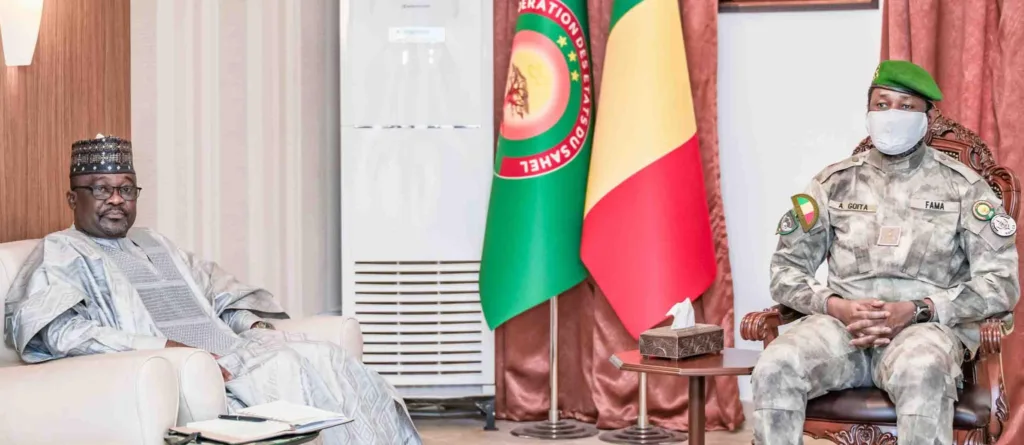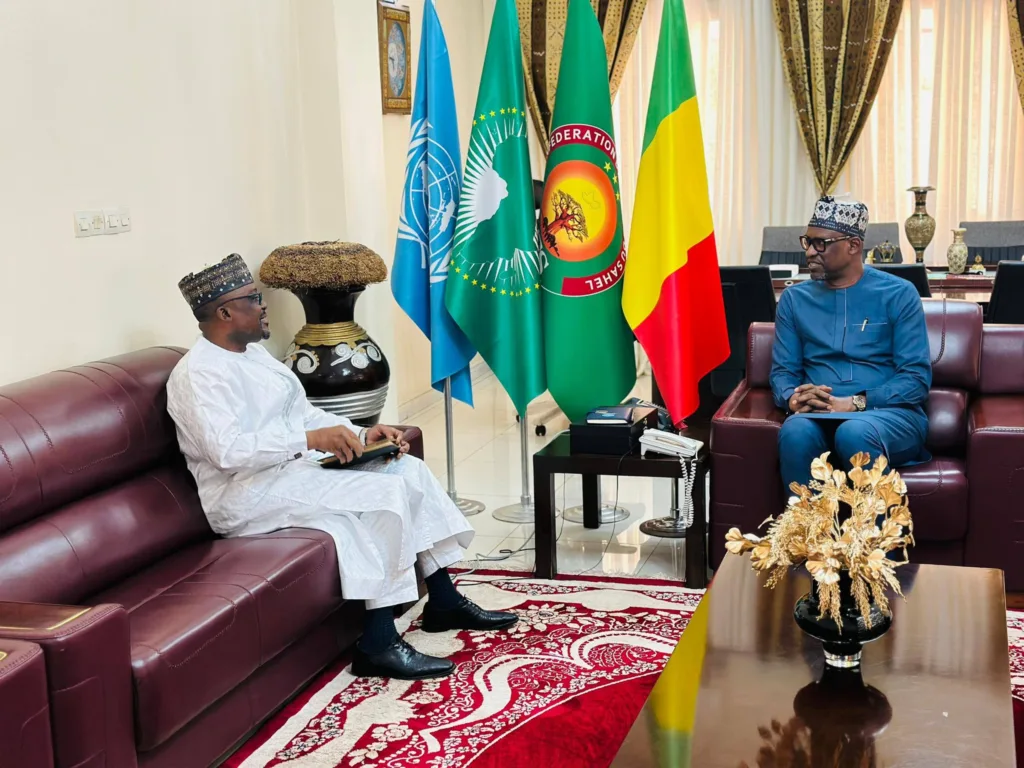
The Executive Secretary of the PAGGW receives the Director of the National Agency of the Great Green Wall of Mauritania and an official of the Ministry in charge of the Environment
January 12, 2017
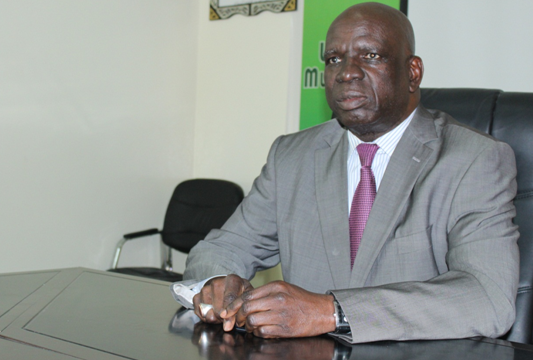
Nouakchott, 12 January 2017 (PAGGW). Prof. Abdoulaye Dia, Executive Secretary of the Pan-African Agency of the Great Green Wall (PAGGW), surrounded by his close collaborators, received yesterday in the mid-afternoon at the Agency’s headquarters Mr. Sidi Mohamed Lehlou and Mohamed Yahya Lafdal, respectively the new Director of the National Agency of the Great Green Wall of Mauritania and Chargé de mission at the Ministry of Environment and Sustainable Development.
After an exchange of pleasantries and good wishes between the officials, Prof. Dia indicated that he has “high expectations regarding the national component of the Great Green Wall, and therefore of Mauritania, the country that hosts the Agency’s headquarters and holds the Presidency in the context of carrying out the missions of the PAGGW”.
The Executive Secretary thus stressed the readiness of the PAGGW to work with the National Agency of the Great Green Wall of Mauritania, in particular through investments to launch, for the benefit of populations, income-generating activities and Integrated Community Agricultural Farms (ICAFs) based on one or two agricultural crops. Mr. Lehlou, who has just taken up his post, gave the assurance that “tangible results will be produced through the execution of these actions”.
The meeting was an opportunity to discuss the Extraordinary Session of the Agency’s Council of Ministers, which will take place in Khartoum, Sudan, from 5 to 7 February 2017, and the need to prepare, with the PAGGW team, the relevant documents in order to ensure a strong participation by the Mauritanian delegation. This view was supported by the Ministry’s Chargé de mission.
The Great Green Wall Initiative, launched in 2005 and coordinated by the PAGGW, created in June 2010 under the auspices of the African Union, is one of Africa’s flagship projects against climate change. It aims to overcome the harmful effects of desertification in the Sahara and the Sahel. It brings together, in alphabetical order, the following eleven (11) countries: Burkina Faso, Chad, Djibouti, Eritrea, Ethiopia, Mali, Mauritania, Niger, Nigeria, Senegal, Sudan.