Great Green Wall: Africa showcases its solutions and accelerates its momentum towards COP17
June 11, 2026
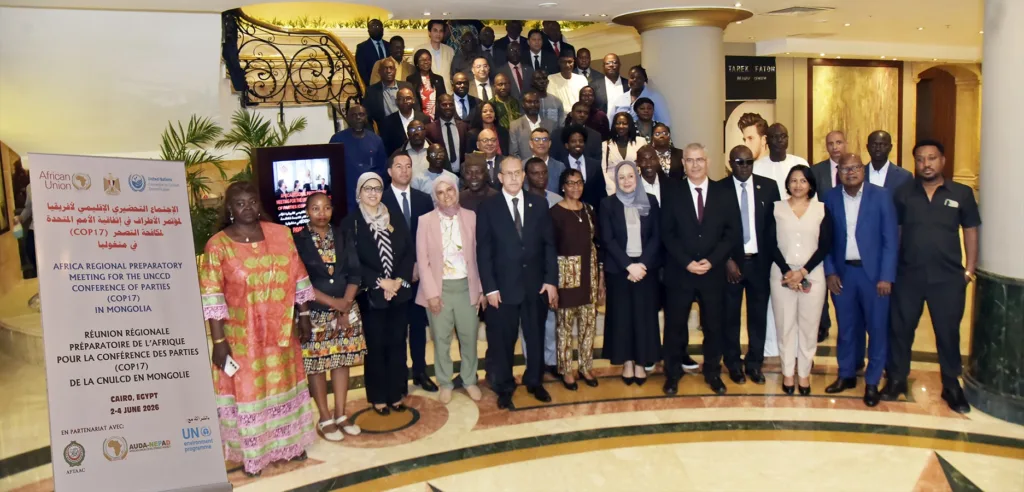
Cairo, Egypt – On the sidelines of the preparatory meeting of the African Group of Negotiators for the UNCCD’s COP17, held from 2 to 4 June 2026, a special session devoted to the Great Green Wall Initiative and to the projects supported by the Global Environment Facility (GEF) made it possible to highlight the progress, the lessons learned and the new prospects of this emblematic continental initiative. This session was held within the framework of the African preparatory meeting organised by the African Union Commission in cooperation with Egypt, the host country, and several international partners. Bringing together nearly sixty African experts, this meeting aims to harmonise the continent’s positions ahead of COP17, scheduled to take place in Ulaanbaatar, Mongolia, around the issues of desertification, drought and land degradation.
With the support of UNEP and ENDA Energie, the session, facilitated by Papa Alassane Mbaye, Head of Communication, Marketing and Advocacy at the Pan-African Agency of the Great Green Wall (PAGGW), and by Adamou Bouhari, Team Leader and Regional Coordinator of the GEF 8 programme in support of the Great Green Wall, brought together representatives of African States, technical and financial partners, regional organisations, civil society and environmental experts.
Major lessons drawn from more than a decade of implementation
In his introductory presentation, Mr Mbaye shared several lessons drawn from the evaluations carried out on the implementation of the Great Green Wall since its launch. The first lesson concerns the crucial importance of involving local communities. According to him, the most successful experiences have shown that populations must be placed at the heart of land restoration actions in order to ensure the sustainability of results on the ground. He also stressed the need to link ecological restoration activities to local economic development. This integrated approach, combining the conservation of natural resources and the creation of economic opportunities, was notably illustrated through the FACI (Integrated Community Agricultural Farms), now considered promising models to be scaled up. Another major lesson is the valorisation of local solutions and endogenous knowledge. Innovative community initiatives must now be strengthened through science, innovation and strategic partnerships. However, he underlined that several challenges persist, in particular sustainable financing, the strengthening of technical capacities, monitoring-evaluation and the need to accelerate large-scale investments.
A new momentum driven by the PAGGW
During his intervention, Mr Mbaye also presented the new momentum undertaken within the Pan-African Agency of the Great Green Wall under the impetus of the Executive Secretary, H.E. Mr Almoustapha Garba. This new orientation rests on two strategic axes: i) the strengthening of institutional governance and the acceleration of partnerships; ii) the modernisation of communication, now oriented towards impact, results and the visibility of African achievements. In this perspective, the PAGGW plans to organise a strategic side-event at COP17, in partnership with the African Union Commission, the African Development Bank (AfDB), the UNCCD and several partner institutions. Scheduled for 25 August, this event will focus on scaling up the Great Green Wall through continental integration and the African Union strategy. The objective will be, in particular, to mobilise public and private financing, strengthen partnerships, promote high-impact bankable projects and mark the launch of a facility with the support of the AfDB.
The GEF 8 programme: 78 million dollars to strengthen resilience in nine countries
Speaking online, Mr Adamou Bouhari presented the regional programme financed by the Global Environment Facility (GEF), with a budget of 78 million dollars and covering nine Sahelian countries as well as a regional coordination project. This programme aims to strengthen the technical, institutional and political capacities of the States in order to accelerate the transition towards sustainable and resilient landscapes in the Great Green Wall areas. The beneficiary countries each have a national project implemented by the National Coordination of the Great Green Wall Initiative with the support of the GEF Agencies, in particular UNEP and BOAD. The Programme is coordinated at the regional level with the support of the United Nations Environment Programme (UNEP).
The programme is structured around several priorities: i) the strengthening of the capacities of national institutions; ii) the restoration of degraded lands and forests; iii) the promotion of sustainable value chains; iv) the integration of gender and youth issues; v) the development of impact investments involving the private sector; vi) the improvement of monitoring-evaluation and knowledge management.
Adamou Bouhari underlined that this initiative constitutes a major innovation by integrating several GEF intervention areas — biodiversity, climate change adaptation and the fight against land degradation — within a single programmatic approach.
From the Sahel to SADC: the Great Green Wall accelerates its continental expansion
Speaking on behalf of the UNCCD Global Mechanism, Catherine Mutambira presented the progress of the Great Green Wall Initiative in Southern Africa (SADC), illustrating the gradual expansion of the Sahelian model on a continental scale. Structured around priorities such as access to water, the fight against drought, the restoration of ecosystems and resilient agriculture, this regional initiative relies in particular on the Zambezi basin as a priority landscape for climate resilience actions.
Approved by the SADC ministers since 2015, this regional momentum has gradually been structured around a common roadmap, with a particular focus on the Zambezi basin, identified as a priority landscape for restoration and climate resilience actions.
She also announced several projects supported by the Climate Investment Funds and the GEF, focusing on drought, gender, youth and capacity-building. For Catherine Mutambira, this momentum confirms that the Great Green Wall now goes beyond the Sahelian framework to become a genuine continental platform for landscape restoration and climate resilience, already inspiring other regions of the world such as the Middle East.
Africa as a global model of resilience
The exchanges also highlighted the growing interest shown in the Great Green Wall beyond the African continent. Several speakers recalled that similar initiatives are now emerging in other regions of the world, in particular in the Middle East with the “Middle East Green Initiative” inspired by the African experience. The participants unanimously stressed the need for Africa to capitalise on this continental expertise and to have the Great Green Wall recognised as a major African solution to desertification, drought and climate change.
A strong African voice for COP17
At the close of this session, the speakers called for greater mobilisation of African States and international partners in order to accelerate the implementation of land restoration and climate resilience commitments. They also advocated for African experiences, in particular those related to the Great Green Wall and to land degradation neutrality, to be better integrated into the decisions of COP17. Through this meeting, Africa reaffirmed its determination no longer to be perceived merely as a vulnerable continent, but as a genuine global laboratory of innovative solutions for the climate, biodiversity and sustainable development.
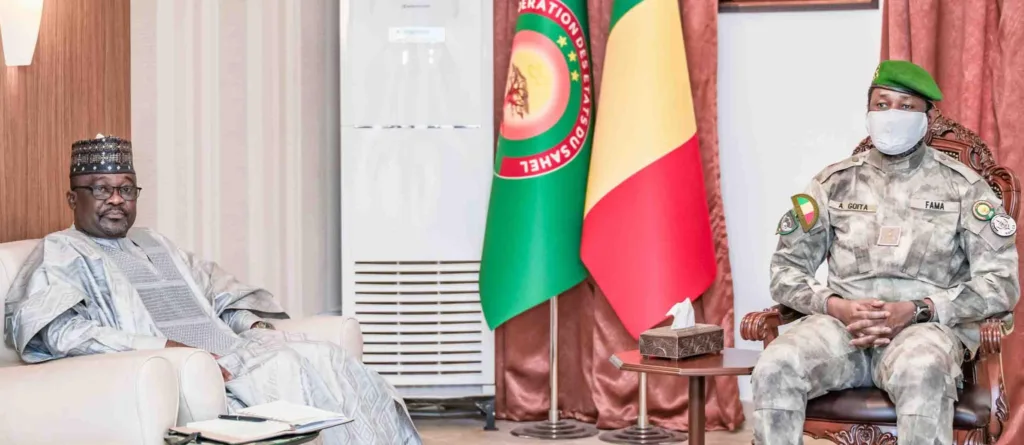
President Goïta receives the Executive Secretary of the PAGGW and provides guidance
June 11, 2026
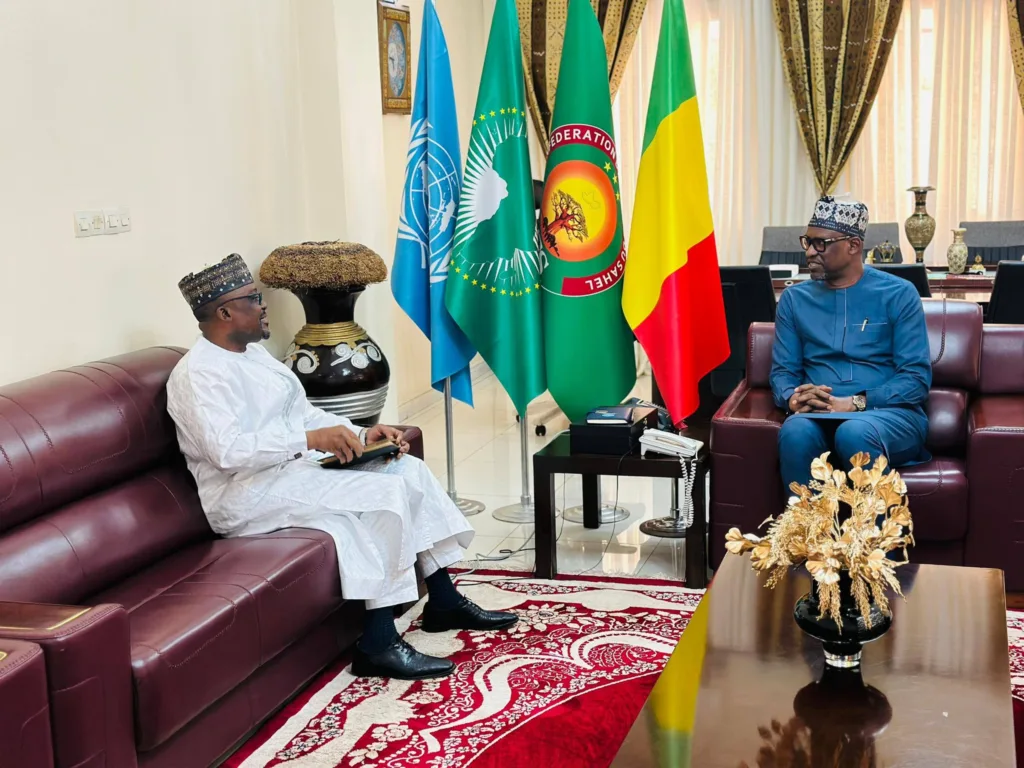
Working mission of the Executive Secretary of the PAGGW to Mali
June 11, 2026
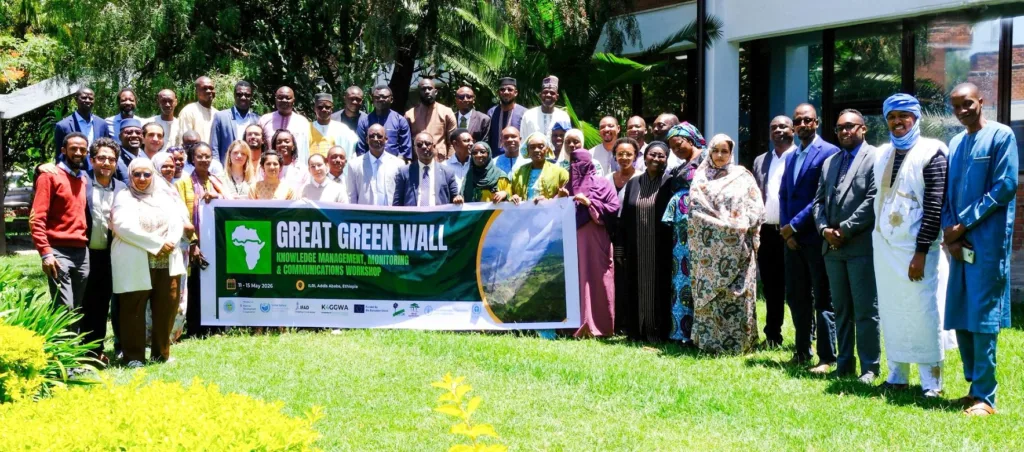
Curtain falls in Addis after five days of work to strengthen the Great Green Wall’s knowledge management, monitoring-evaluation and communication
May 16, 2026