Curtain falls in Addis after five days of work to strengthen the Great Green Wall’s knowledge management, monitoring-evaluation and communication
May 16, 2026
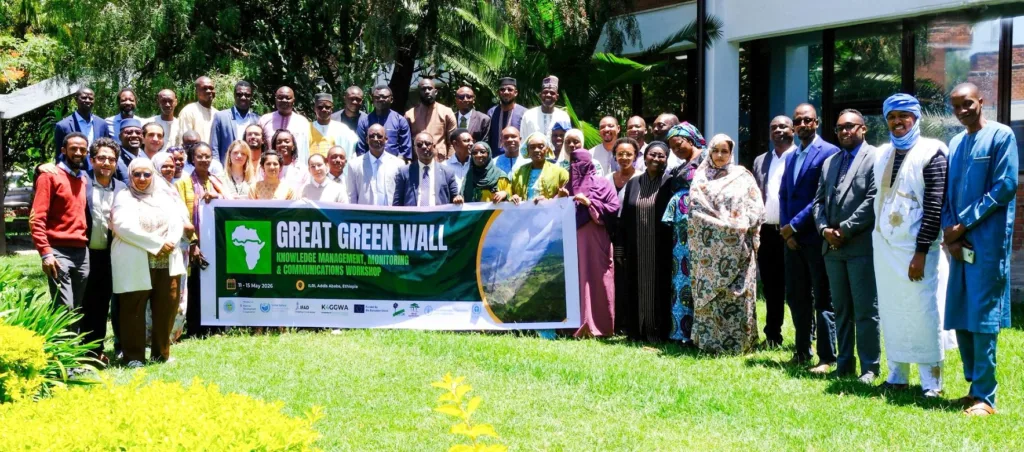
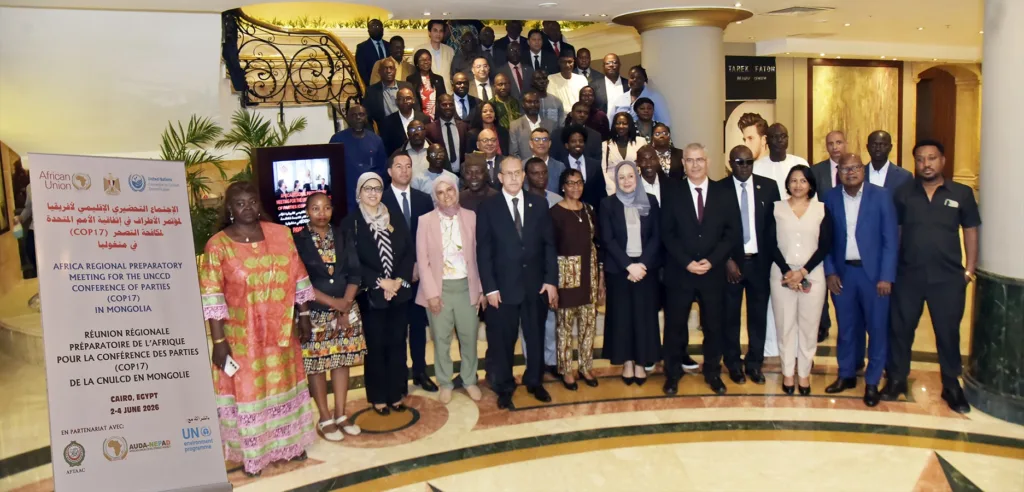
From 11 to 15 May 2026, Addis Ababa, Ethiopia, hosted the regional workshop on knowledge management, monitoring-evaluation and communication of the Great Green Wall Initiative. Organised by the Pan-African Agency of the Great Green Wall (PAGGW), in partnership with UNCCD, IFAD and CIFOR-ICRAF, this regional meeting brought together experts in knowledge management, monitoring-evaluation and communication from the national Great Green Wall structures, as well as several technical partners.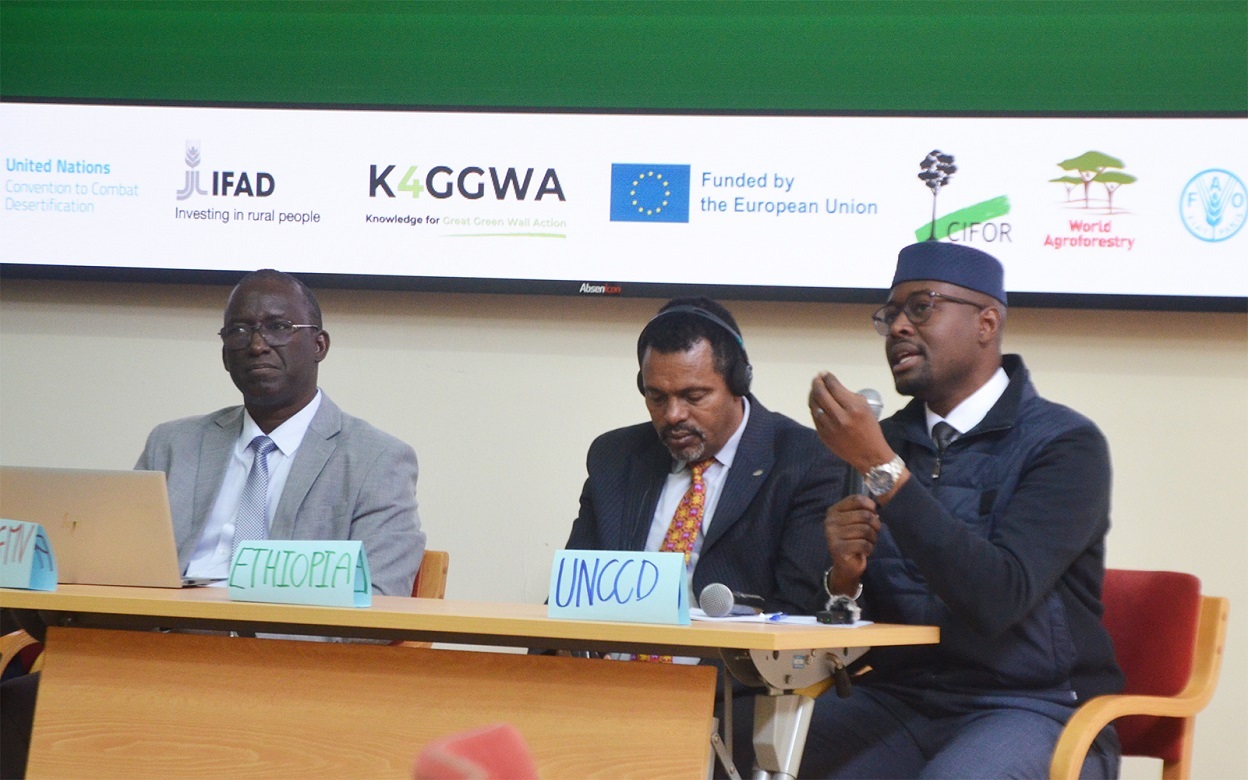
This workshop marks an important step in the institutional consolidation process of the Great Green Wall Initiative for the Sahara and the Sahel. For the first time, the three strategic pillars of communication, monitoring-evaluation and knowledge management were brought together within a single regional framework in order to strengthen the coherence of actions, harmonise tools and build a shared vision around the issues of land restoration, climate resilience and sustainable development in the Saharo-Sahelian area.
In his welcome address, the Great Green Wall Focal Point for Ethiopia, Dr Adefires, stressed the need for a collective and inclusive commitment to the initiative. “Knowledge-sharing is a resource that grows stronger as it is disseminated,” he declared, before underlining the importance of capacity-building, collective learning and the mobilisation of young people to achieve the objectives of the Great Green Wall.
Speaking on behalf of IFAD, Mr Yonas Mekonen recalled the importance of the Regional Assistance Programme for the Great Green Wall as a mechanism for coordination and the sharing of experiences among member countries. “This dynamic of cooperation and integration must make it possible to strengthen synergies and break down silos between approaches in the service of the objectives of the Great Green Wall,” he affirmed.
Mr Ibrahima Touré of CIFOR-ICRAF, for his part, underlined the importance of knowledge-sharing as an essential lever for improving the visibility and impact of restoration actions. “Knowledge management must enable the transformation of local experiences into regional solutions capable of inspiring and accelerating restoration efforts in all member countries,” he declared.
In his opening speech, Dr Sakhoudia Thiam, representing the Executive Secretary of the PAGGW, recalled the scale of the challenges facing the Sahel, while underlining the strategic role of the Great Green Wall in land restoration, the creation of green jobs and the strengthening of climate resilience. “The workshop responds directly to the recommendations made during the Djibouti residential seminar concerning the strengthening of the Great Green Wall’s knowledge management, monitoring and reporting systems,” he indicated.
Throughout the five days of work, the participants addressed several strategic themes, in particular the harmonisation of monitoring-evaluation systems, the clarification of the criteria for characterising Great Green Wall projects, the analysis of the various regional reporting and knowledge management platforms, as well as strategic communication around the achievements of the initiative. The workshop made it possible to consolidate several innovative technical tools, in particular interactive dashboards on land health, restoration narratives and systems for monitoring biophysical and socio-economic indicators, and to make recommendations relating to the management, coordination and synchronisation of the various regional geospatial data and project and programme management platforms.
The discussions made it possible to highlight a major evolution of the Great Green Wall. Initially perceived as a reforestation project, the initiative is today recognised as an integrated programme of land restoration, climate change adaptation, biodiversity preservation, economic development and the strengthening of security in the Sahelian areas.
The workshop was above all marked by an in-depth reflection on the unobjective narratives lacking verification of sources, often unfavourable to the Great Green Wall, and the need to strengthen the visibility of the initiative’s real impacts. The participants advocated for communication based more on evidence, scientific results, community testimonies and the production of multimedia content capable of deconstructing the denialist discourse around the Great Green Wall. Among the main achievements of the meeting is the establishment of a new regional momentum around the coordination of monitoring-evaluation, communication and knowledge management systems. The participants recommended the creation of a genuine regional community of practice in order to strengthen the exchange of experiences between countries and improve the quality of regional reporting.
The technical and financial partners reaffirmed their commitment to supporting the member States through capacity-building programmes, technical training, the pooling of digital tools and the development of multimedia storytelling to showcase the impacts of the Great Green Wall on communities. At the close of the work, the participants reaffirmed their shared determination to strengthen regional coordination, improve the mobilisation of funding, consolidate the monitoring-evaluation mechanisms and develop more strategic, credible and impact-oriented communication.
Closing the work, Dr Sakhoudia Thiam commended the quality of the exchanges as well as the commitment of the participants and partners. He stressed the need for a clear roadmap to ensure the follow-up of the recommendations made during the workshop and to consolidate the achievements of this new regional momentum around the Great Green Wall. This Addis Ababa meeting thus opens a new stage in the consolidation of the Great Green Wall Initiative, with the stated ambition of carrying a stronger, more coordinated and more credible regional voice at the upcoming international deadlines, in particular the UNCCD’s COP17.