Regional Launch of the SURAGGWA Programme in Nouakchott: USD 222 Million to Strengthen the Sahel’s Climate Resilience
December 15, 2025
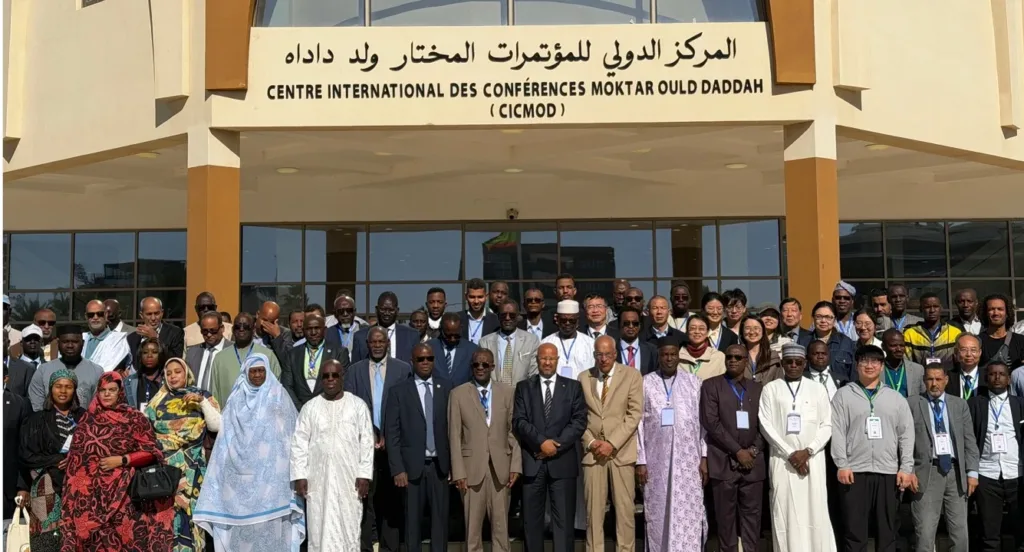
Nouakchott, Mauritania, 15 December 2025 – The Government of the Islamic Republic of Mauritania, in collaboration with the Food and Agriculture Organization of the United Nations (FAO) and the Pan-African Agency of the Great Green Wall (PAGGW), held the regional launch of the “Scaling-Up Resilience in Africa’s Great Green Wall” (SURAGGWA) programme in Nouakchott this Monday.
A strong political commitment to the Sahel. Approved in July 2025 by the Green Climate Fund (GCF), the United Nations financial mechanism dedicated to combating climate change, this programme mobilises total financing of USD 222 million. This amount includes USD 150 million in grants from the GCF and USD 72 million in co-financing, benefiting eight Sahelian countries: Burkina Faso, Djibouti, Mali, Mauritania, Niger, Nigeria, Chad and Senegal.
In his opening address, Salah Eddine Ould El Abass, Secretary General of the Ministry of Environment and Sustainable Development, representing the Government of Mauritania, underscored the strategic importance of the programme for the Sahel region:
“It is with great pleasure that I welcome you to this important regional meeting, held in a particularly sensitive environmental context marked by the intensification of climate challenges in the Sahel region. These challenges have now become a matter of sovereignty, closely linked to the security, stability and development pathways of our countries. In this context, the Great Green Wall Initiative represents a major political and strategic choice, adopted by African States as a common framework to strengthen resilience and promote integrated sustainable development in the region.”
A transformative programme led by FAO
For FAO, SURAGGWA marks a major step in supporting Sahelian countries in the face of the effects of climate change.
The FAO Representative in Mauritania, Jean Sènahoun, explained that the programme is built on three components: landscape restoration through agroecological and agroforestry practices to rehabilitate degraded land; the development of value chains for non-timber forest products, in order to improve market access, strengthen technical skills and promote the financial inclusion of smallholders, particularly women; and the strengthening of institutional capacities to improve planning, monitoring, coordination and resource mobilisation at the national and regional levels.
Building on this approach, Ms Bintia Stephen-Tchicaya, FAO Subregional Coordinator for West Africa, emphasised the ultimate goal: “Beyond the figures, our real success will be the positive and lasting transformation in the daily lives of communities. Together, let us make the Sahel a greener and more resilient space.”
A major contribution to the Great Green Wall Initiative
For his part, Mr Almoustapha Garba, Executive Secretary of the Pan-African Agency of the Great Green Wall (PAGGW), emphasised the programme’s strategic alignment with continental objectives. “The current enthusiasm and interest shown by member countries amply demonstrate the importance of SURAGGWA as a model and a solution for building the resilience of Sahelian populations in the face of the challenges of climate change, land degradation and biodiversity loss,” he stated.
An exemplary partnership with the Green Climate Fund
The support of the GCF was also hailed as a strong signal in favour of the Sahel: “The approval of SURAGGWA by the Green Climate Fund reflects the confidence placed in the Sahelian countries and their partners. This financing will make it possible to generate lasting climate, environmental and socioeconomic impacts on a large scale,” said the Representative of the Green Climate Fund, Mr Gabriel Boc.
Concrete impacts expected
Ultimately, the programme will enable the restoration of 1.3 million hectares of degraded land, the improvement of the living conditions of 5.7 million people and the sequestration of 65 million tonnes of carbon.
SURAGGWA will thus contribute directly to the objectives of the Great Green Wall Initiative, which aims, by 2030, to restore 100 million hectares of land, create 10 million green jobs and sequester 250 million tonnes of CO₂ equivalent.
Strengthened regional governance
The launch of the programme was followed, on 16 December 2025, by the first session of the Regional Steering Committee (COPIL), the strategic body responsible for guiding implementation, ensuring regional coordination and overseeing the alignment of the SURAGGWA programme with the 2021-2030 Decade Priority Investment Plan of the Pan-African Agency of the Great Green Wall.
Source: FAO