Djibouti Hosts the 4th Edition of the Residential Seminar and Great Green Wall Week 2026
February 16, 2026
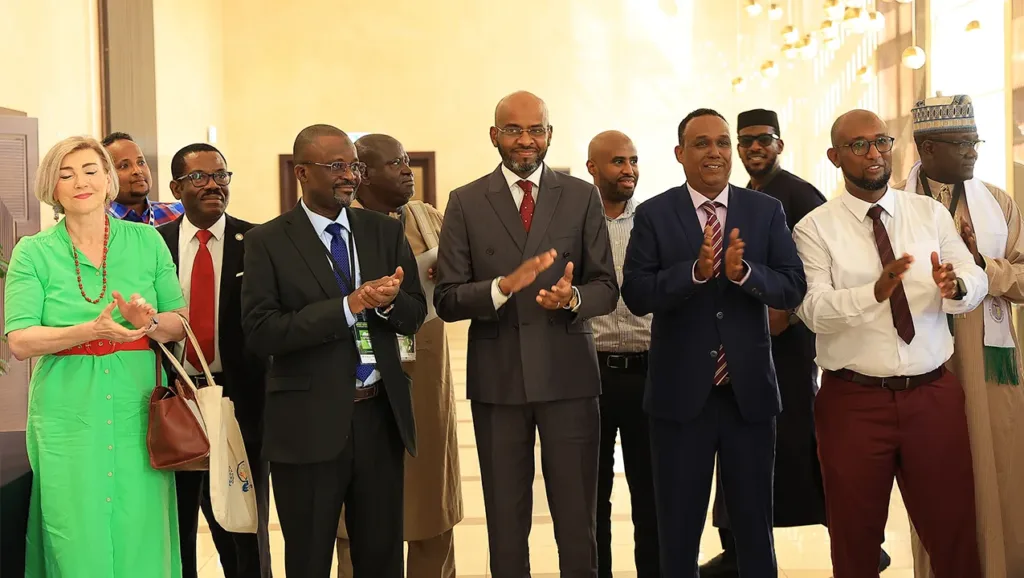
On Sunday 15 February 2026, Djibouti hosted the official launch ceremony of the fourth edition of the Residential Seminar and Great Green Wall (GGW) Week 2026, a major regional event dedicated to accelerating the implementation of the Great Green Wall Initiative and strengthening the resilience of territories in the face of climate and environmental challenges.
Jointly organised by the Ministry of Environment and Sustainable Development of the Republic of Djibouti and the Pan-African Agency of the Great Green Wall (PAGGW), this meeting falls within the framework of the Decade Priority Investment Plan (PIPD 2021–2030), adopted by the Heads of State and Government of the member countries of the Initiative. After more than a decade of implementation, the Great Green Wall now stands as one of the most accomplished models of sustainable management of arid and semi-arid zones in Africa.
The opening ceremony brought together delegations from the member countries of the Great Green Wall corridor, representatives of international organisations, technical and financial partners, research institutions, the private sector as well as civil society actors. It was marked by several high-level addresses underscoring the strategic and transformative scope of the Initiative.
In his welcoming remarks, the GGW National Focal Point for Djibouti expressed his satisfaction at hosting the delegations in Djibouti and recalled the shared vision carried by the Great Green Wall: to build an Africa that is resilient, united and committed to land restoration and the sustainable transformation of territories. He highlighted the strong regional mobilisation around this fourth edition, with the participation of eight of the eleven member countries that make up the GGW corridor, as well as the decisive support of institutional and financial partners, notably CIFOR-ICRAF.
Speaking on behalf of the technical and financial partners, the representative of the United Nations Environment Programme (UNEP), Mr Adamou Bouhari, commended the steadfast commitment of States and of the PAGGW to the implementation of the Initiative. He highlighted the role of the Great Green Wall as a leading African tool for delivering sustainable development, attracting growing interest beyond the African continent. He also emphasised the importance of strengthened coordination, synergy of interventions and the structuring role of national coalitions as levers to support action, rather than as competing structures.
The Ambassador of the European Union to Djibouti, Her Excellency Ms Denisa-Elena Lonete, stressed that the Great Green Wall is one of the main responses to the challenges of desertification, land degradation and drought in the Sahel and the Horn of Africa. She recalled the strong and steadfast commitment of the European Union to the Initiative, particularly since the One Planet Summit of 2021, and announced the award of additional funding of EUR 7 million as well as the extension of the Knowledge for Great Green Wall Action programme until 2030. She highlighted the central role of research, innovation and knowledge management in ensuring the impact and sustainability of GGW actions.
In his address, the Executive Secretary of the PAGGW, H.E. Mr Almoustapha Garba, expressed his deep gratitude to the Government of the Republic of Djibouti for the warm welcome and the successful organisation of the ceremony. He recalled that the Residential Seminar constitutes an annual strategic framework for assessment, planning and projection, aimed at strengthening the governance of the Initiative, improving the mobilisation of and access to financing, consolidating synergies between member States and partners, and promoting scientific innovation as well as knowledge sharing. He underscored the special nature of the 2026 edition, paired with the Great Green Wall Week, illustrating the convergence between science, public policy and field action, and called for an acceleration of actions and greater national ownership to ensure the sustainability of interventions.
The ceremony was officially opened by His Excellency Mr Mohamed Abdoulkader Moussa Helem, Minister of Environment and Sustainable Development of the Republic of Djibouti. In his speech, the Minister reaffirmed the strategic importance that Djibouti attaches to the Great Green Wall Initiative, regarded as a major lever in the fight against desertification, land restoration, green job creation and the strengthening of community resilience. He recalled that the Residential Seminar and Great Green Wall Week constitute an essential platform for dialogue, the sharing of experiences and capacity building, and called for the recommendations arising from the proceedings to be translated into concrete, measurable and lasting actions in the service of the people.
The fourth edition of the Residential Seminar and Great Green Wall Week aim to strengthen the governance and effectiveness of the implementation of the Initiative, by bringing together all stakeholders around a joint analysis of achievements, challenges and future priorities. The expected work should make it possible to improve the coordination and synergy of interventions, strengthen the mobilisation of financing, promote structured and high-impact projects, and consolidate the central role of member States and the Pan-African Agency of the Great Green Wall. Through the sharing of knowledge, innovations and good practices, this meeting aims to produce operational recommendations capable of accelerating land restoration, strengthening community resilience and making the Great Green Wall a sustainable lever for development, green jobs and stability for the territories concerned.