3rd Extraordinary Session of the Council of Ministers of the PAGGW
February 11, 2017
3rd Extraordinary Session of the Council of Ministers of the PAGGW: results achieved and challenges to be faced
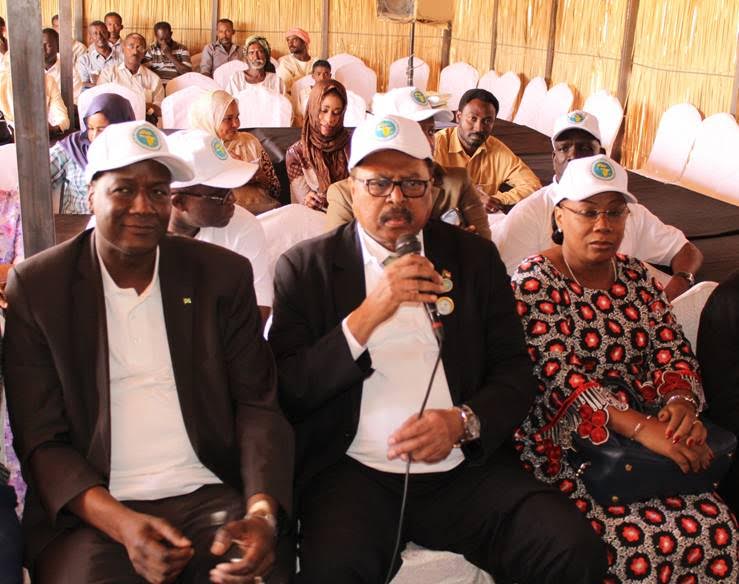
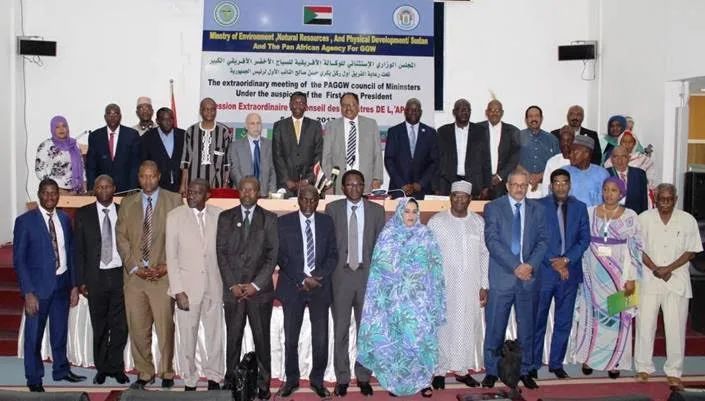
The Ministers in charge of the environment, forestry and sustainable development of the eleven (11) member countries of the Pan-African Agency of the Great Green Wall (PAGGW) met in Khartoum for the Extraordinary Session of the sub-regional institution.
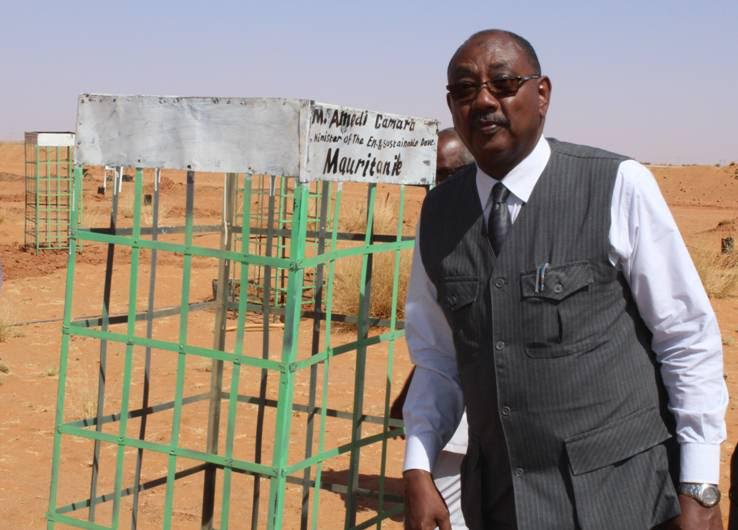
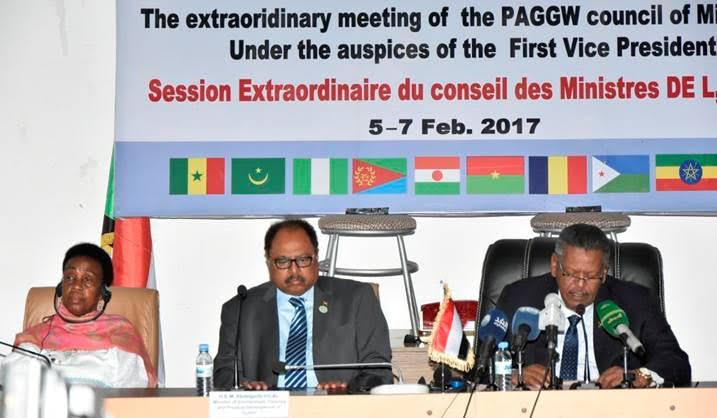
Khartoum, Nouakchott, 11 February 2017. It was at the confluence of the two Niles and in the auditorium of the prestigious Sudanese Standards and Metrology Organization that the work of the 3rd Extraordinary Session of the Ministers of the Pan-African Agency of the Great Green Wall opened on 7 February, under the High Patronage of His Excellency Mr. Bakrey Hassan Salih, 1st Vice-President of the Republic of Sudan, and His Excellency Mr. Amedi Camara, Minister of Environment and Sustainable Development of the Islamic Republic of Mauritania, Chair of the Council of Ministers of the PAGGW and whose country hosts the Organization’s headquarters.
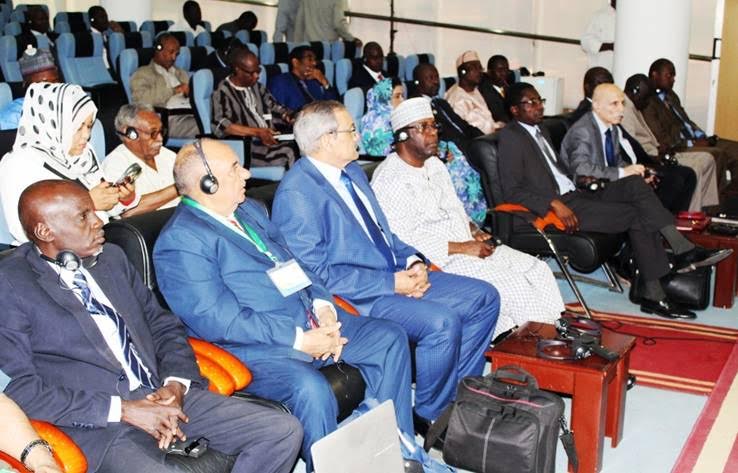
This took place in the presence of the focal points, Directors of the national Great Green Wall Agencies, heads of environmental services, leaders of civil society organizations dealing with environmental issues, as well as representatives of technical and financial partners and of international or continental organizations whose portfolios and areas of practice include the environment. Among these strategic guests were notably the African Union, through its Commissioner for Agriculture and Rural Economy, and NEPAD, UN-Environment, and the CILSS.
During this session, the Ministers examined the PAGGW’s key documents, prepared earlier by the Technical Committee of Experts. These documents relate to the 2016 Technical Activity Report, the 2017 Action Plan, the 2016 Budget Execution Report, the draft 2017 Budget, the audit reports for the 2011 to 2015 financial years, and the project to establish the Great Green Wall Carbon Bank, conceived as an instrument for mobilizing and making available new financial resources for the benefit of communities. Sudan could host the headquarters of this innovative African financing institution, whose preliminary feasibility study was carried out by two Sudanese consultants.
It emerges from the documents that the first five-year phase, 2011-2015, saw, in all member States, a number of achievements on the ground, including reforestation, the setting aside and restoration of several thousand hectares of land, the protection and conservation of specific ecosystems, the rehabilitation of water resources and the implementation of wealth-generating activities. Nevertheless, despite these results, the persistent challenges to the implementation of the Great Green Wall Initiative in the Member States remain coordination, monitoring and the mobilization of resources for activities falling within the 2016-2020 Strategy.
Sudan, a “benchmark witness” to the implementation of the Great Green Wall
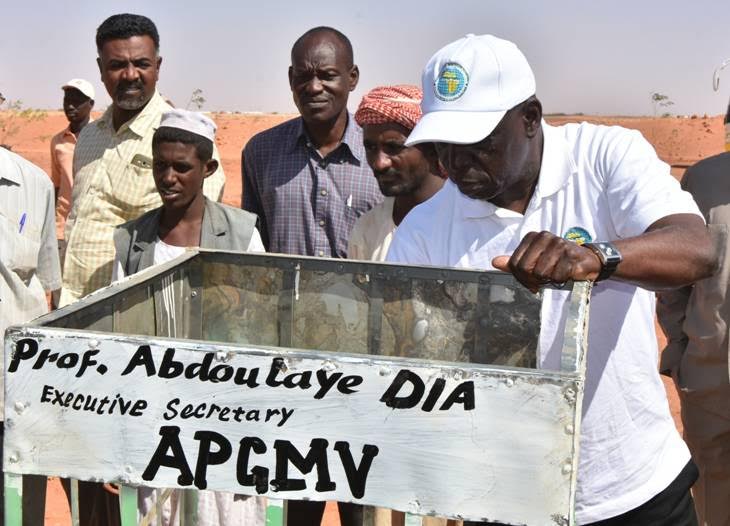
In his address, the Executive Secretary of the PAGGW, Prof. Abdoulaye Dia, thanked the Government of Sudan for its multifaceted support to the Great Green Wall and, on this point, recalled the welcome extended by Sudan to a similar meeting organized in November 2011 and the more recent one in October 2015 on the training of experts on the Great Green Wall. Professor Dia sees in this hospitality of Sudan the sign of a “benchmark witness” to the path charted by the Heads of State and Government who created the Great Green Wall Initiative.
He commended the actions carried out on the ground by the various national Great Green Wall Agencies, thereby contributing to mitigating the harmful effects of climate change on the populations concerned. For Professor Dia, the environment is “the most precious capital for populations”, which, in his view, must be preserved in order to ensure better living conditions for future generations. And the Professor recalled, to this end, the maxim of “leaving the palaver tree and taking action”.
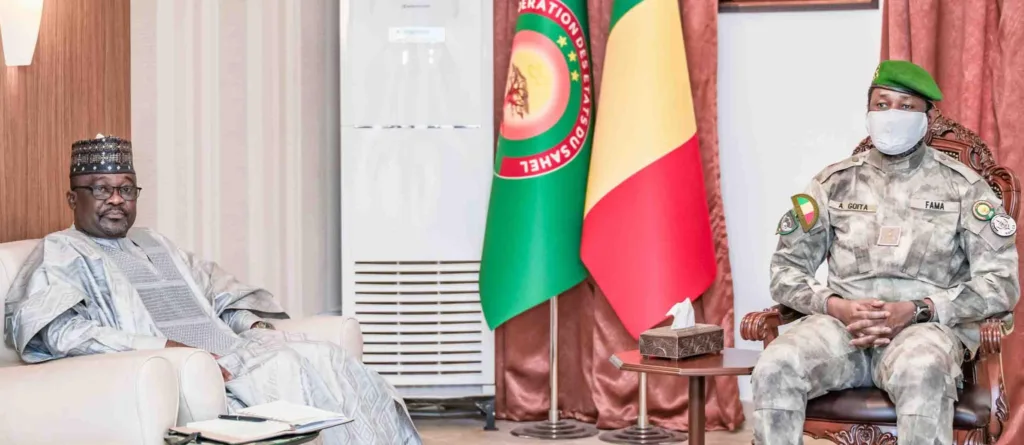
Taking the floor, the 1st Vice-President of Sudan, who had at his side the Minister of Environment, Natural Resources and Physical Development, Dr. Hassan Abdelgadir Hilal, addressed his thanks to the various delegations that had made the trip to Khartoum, regarding this as a symbol of the commitment of the States and institutions they represent. General Bakrey Hassan Salih gave the firm promise of the Government of Sudan to make every effort to contribute to the success of the Great Green Wall.
For Minister Amedi Camara, Chair of the Council, “the Great Green Wall Initiative is a concrete response in the fight against climate change and is consistent with the African Union’s Agenda 2063”. Minister Camara recalled the political will of the Heads of State and Government to take into account the interests of their respective populations in these terms: “the implementation of the Great Green Wall Project in many of our countries demonstrates that it is not a utopia, but a concrete response to combating climate change, fostering local development and building the resilience of our most vulnerable populations”.
The Extraordinary Session of the Ministers had been preceded the previous day by a tree-planting session in Omdurman, a Great Green Wall site located 60 km from Khartoum. The Great Green Wall Initiative, launched in 2005 and coordinated by the PAGGW, created in June 2010 under the auspices of the African Union, is one of Africa’s flagship projects against climate change. It aims to overcome the harmful effects of desertification in the Sahara and the Sahel. It brings together, in alphabetical order, the following eleven (11) countries: Burkina Faso, Chad, Djibouti, Eritrea, Ethiopia, Mali, Mauritania, Niger, Nigeria, Senegal, Sudan.